Biorefinery
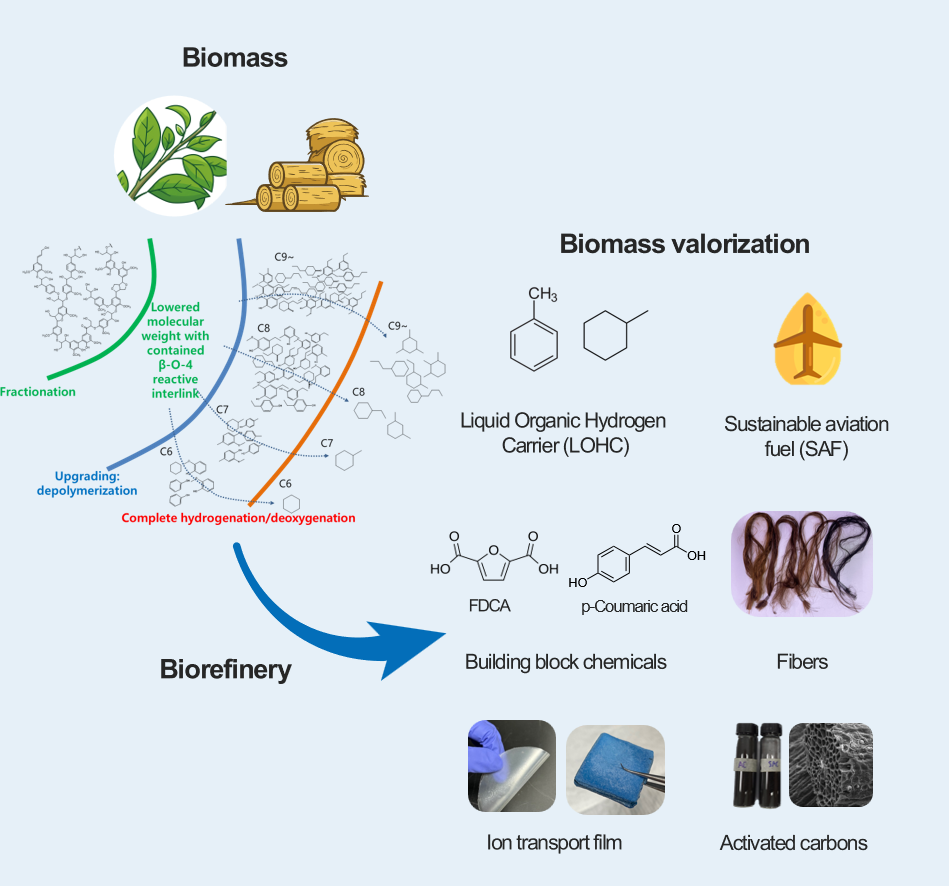
We develop chemical processes that convert biomass into value-added products and biofuels. Our work addresses the technical barriers that keep whole-biomass utilization from becoming economical at scale.
- Feedstock-agnostic biomass conversion — one process train for many different biomass sources.
- Reactive lignin fractionation and valorization — recovering lignin in a form that is still chemically useful.
- Innovative separation and purification techniques for complex bio-derived mixtures.
- Sustainable hydrogen supply for lignin depolymerization and hydrodeoxygenation.
- Catalytic conversion of cellulose to platform chemicals for bio-plastic materials.
- Techno-economic and life-cycle assessment of whole-biomass utilization.
- Innovative catalysts that survive and perform in aqueous environments.
CO₂ Capture & Conversion
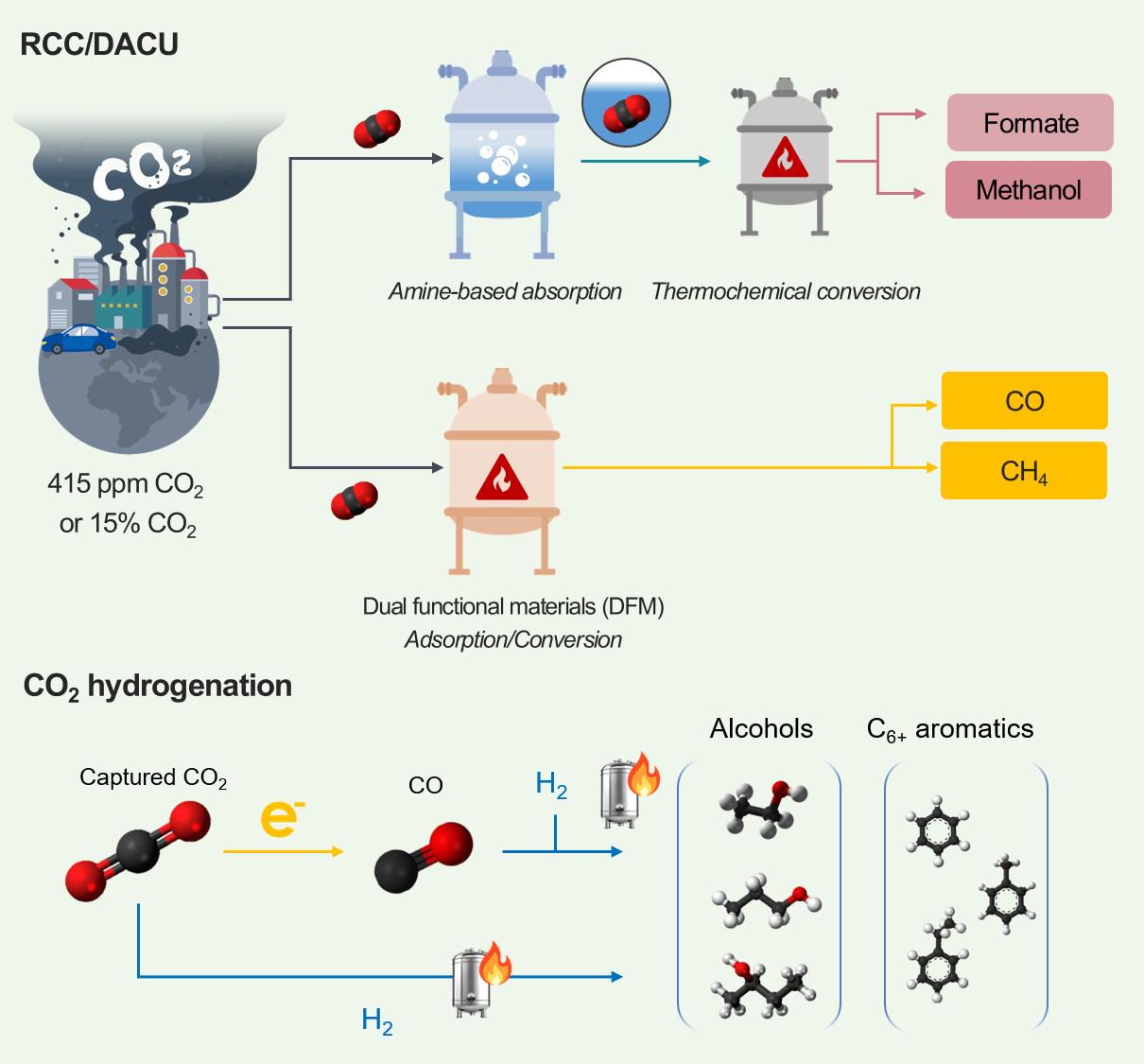
Our CO₂ research spans reactive capture and conversion, direct air capture and utilization, and high-pressure CO₂ hydrogenation — from dilute atmospheric CO₂ all the way to concentrated flue gas.
Reactive Capture and Conversion (RCC)
Development of dual-functional materials that capture and convert CO₂ in a single step, cutting the energy consumed by separation, purification, pressurization and heating.
Direct Air Capture and Utilization (DACU)
Capturing CO₂ at 400 ppm directly from air and converting it to CO, CH₄, formic acid, methanol and other products.
CO₂ Hydrogenation
High-temperature, high-pressure catalytic reactions that produce CO, methane, methanol, ethanol and aromatics from CO₂.
Plastic Conversion
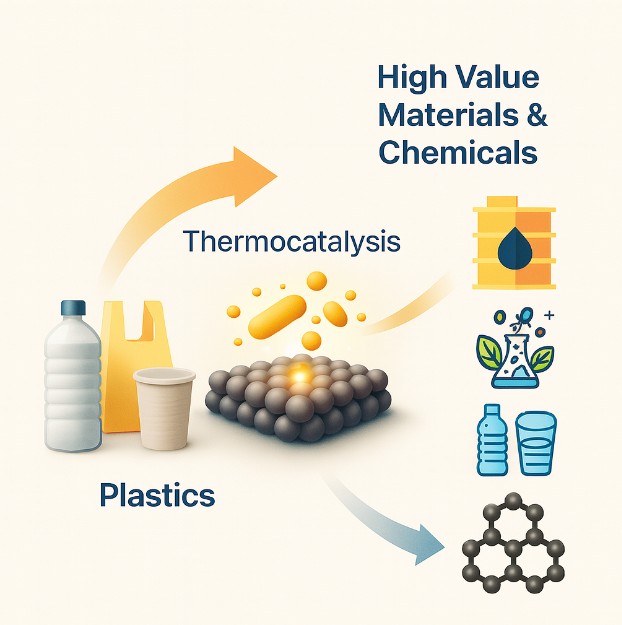
We design advanced catalysts for waste plastic upcycling — turning end-of-life polymers back into fuels, lubricants and monomers rather than burning them.
- Hydrogenolysis of PE/PP into high-quality liquid fuels and lubricant base oils.
- Selective aerobic oxidation of polyolefins producing dicarboxylic acids.
- Hydrodeoxygenation (HDO) of PET yielding aromatic and naphthenic hydrocarbons.
- Continuous flow hydrolysis of PET for terephthalic acid recovery.
NOx Removal
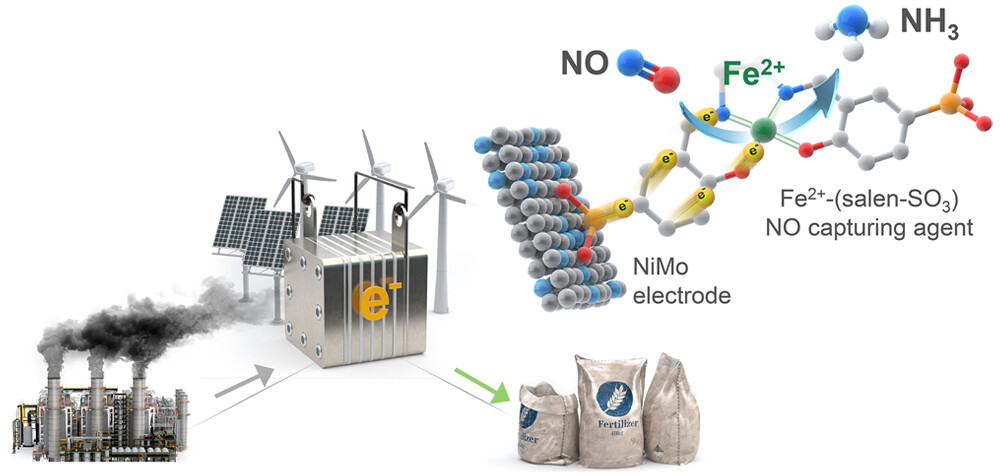
Electrochemical reactive capture of NO under oxygen-containing flue gas conditions, using Fe(II)-(salen-SO₃)-based catalysts, and direct conversion of the captured NO into ammonia — turning a pollutant into a product.
- Reactive capture of NO in the presence of oxygen, where conventional absorbents lose selectivity.
- Fe(II)-(salen-SO₃) catalysts designed for stable NO binding and release.
- Electrochemical NO-to-NH₃ conversion at ambient conditions.
Every publication from our eight principal investigators, in one place.
Browse publications →